Wondering what your bouquet is saying? Flower meanings and symbolism mostly come down to type and colour: red for love, yellow for joy, white for purity. Culture can change the message, so check before you send.
For a wider look at what you can buy, see this guide to types of cut flowers.
| Item | Value |
|---|---|
| Victorian era, when floriography became a cultural phenomenon | 1837-1901 |
| Lady Mary Wortley Montagu’s letters introduce the Turkish language of flowers to Europe | 1718 |
| Kate Greenaway’s “Language of Flowers” | 1884 |
| Roses to send as an apology (Victorian code) | 15 roses |
| Roses to say “I’m yours” (Victorian code) | 24 roses |
These dates and counts come from MO BLUMEN’s guide to the language of flowers and Nature Hills Nursery’s piece on Victorian floriography. Sources differ on details and can be revised, so check the source before you rely on the figures.
Where floral symbolism comes from
Floriography is the language of flowers: giving blooms a meaning based on the type of flower, its colour, or both. Bloom & Wild notes that it has been practised for thousands of years in many cultures across Europe, Asia and Africa.
MO BLUMEN traces the language of flowers to ancient Persia, where certain blooms carried coded meanings in poetry and gardens. The tradition then moved to Ottoman Turkey, where it was formalized as selam. In 1718, Lady Mary Wortley Montagu wrote about the Turkish language of flowers in her letters and introduced the concept to Europe, as MO BLUMEN’s history explains.
Many meanings also come from myth. In the story of Narcissus, a beautiful man fell in love with his own reflection, and the daffodil took his place, as Bloom & Wild retells it. Shakespeare used the same habit: in Hamlet, a character says “There’s rosemary, that’s for remembrance”, a line quoted by Nature Hills Nursery.
How the Victorians turned flowers into a code
The Victorian era (1837-1901) made floriography a cultural phenomenon, and dozens of flower dictionaries were published. The most famous was Kate Greenaway’s “Language of Flowers” in 1884, according to MO BLUMEN.
Victorians carried floral dictionaries to decipher the bouquets they received and to compose their replies, as My Modern Met describes. How a bouquet was given mattered as much as what was in it. Nature Hills Nursery lists these conventions for the small bouquets called tussie-mussies or nosegays:
- A flower given with the right hand meant yes, and the left hand meant no.
- Holding the flowers at heart level meant you agreed with the message.
- Holding them upside down conveyed the opposite of the blooms’ usual symbolism.
- A wilted bouquet carried an obvious message of its own.
Even the number of roses counted. According to the same source, one rose meant love at first sight, six meant infatuation, 15 was an apology, and 24 said “I’m yours”.
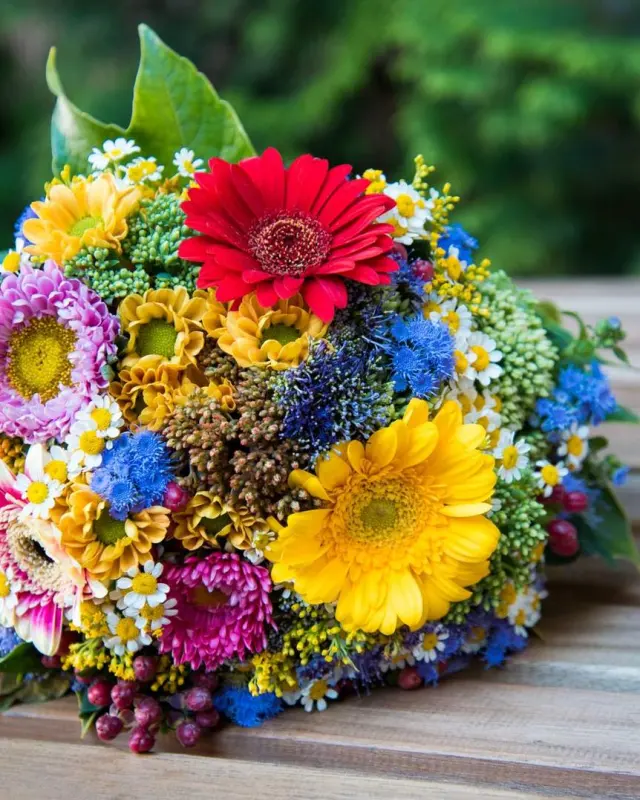
Single flowers and bouquets also said different things. Bloom & Wild explains that a single red rose would unmistakably represent love and passion, while a mixed bouquet allowed a richer, layered expression of feelings.
Common flowers and their traditional meanings
These meanings are taken from the list of common flowers published by Bloom & Wild. Treat them as a starting point rather than a rulebook.
| Flower | Traditional meaning |
|---|---|
| Rose | Love, passion, beauty |
| Tulip | Perfect love, elegance |
| Sunflower | Adoration, loyalty |
| Iris | Faith, wisdom, hope |
| Peony | Prosperity, good fortune |
| Lavender | Serenity, calmness |
| Forget-me-not | True love, memories |
| Daisy | Innocence, purity, new beginnings |
Rose colour changes the message too. MO BLUMEN lists the pink rose for gratitude and appreciation, and the yellow rose for friendship and reconciliation.
Meanings are not always consistent. Bloom & Wild says the daffodil symbolises requited love, while My Modern Met says Victorians read it as chivalry and unrequited love. The same page says Victorians gave anemones the meaning of forsaken, where Bloom & Wild lists anticipation and fragility.
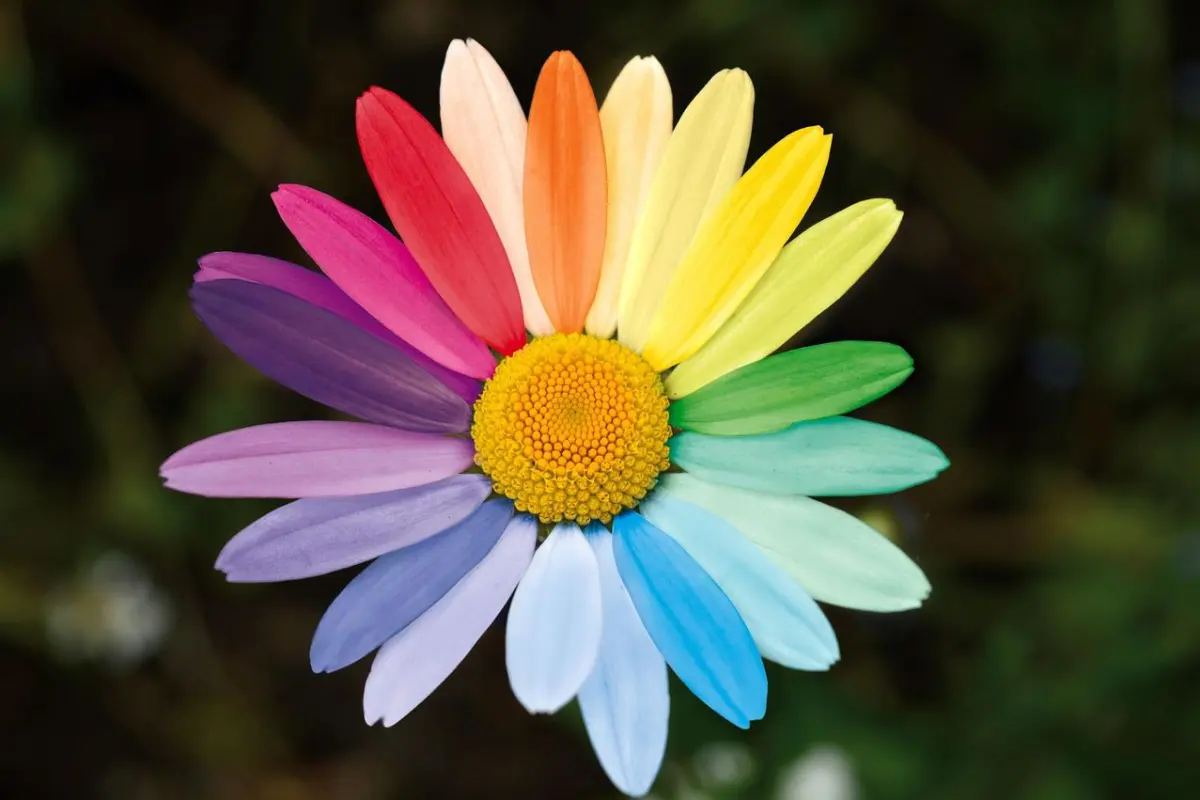
What flower colours mean
When you are not sure of a flower’s own meaning, colour is a reliable guide. These readings come from Bloom & Wild:
- Red: passion, love and affection.
- Pink: typically grace, joy and innocence.
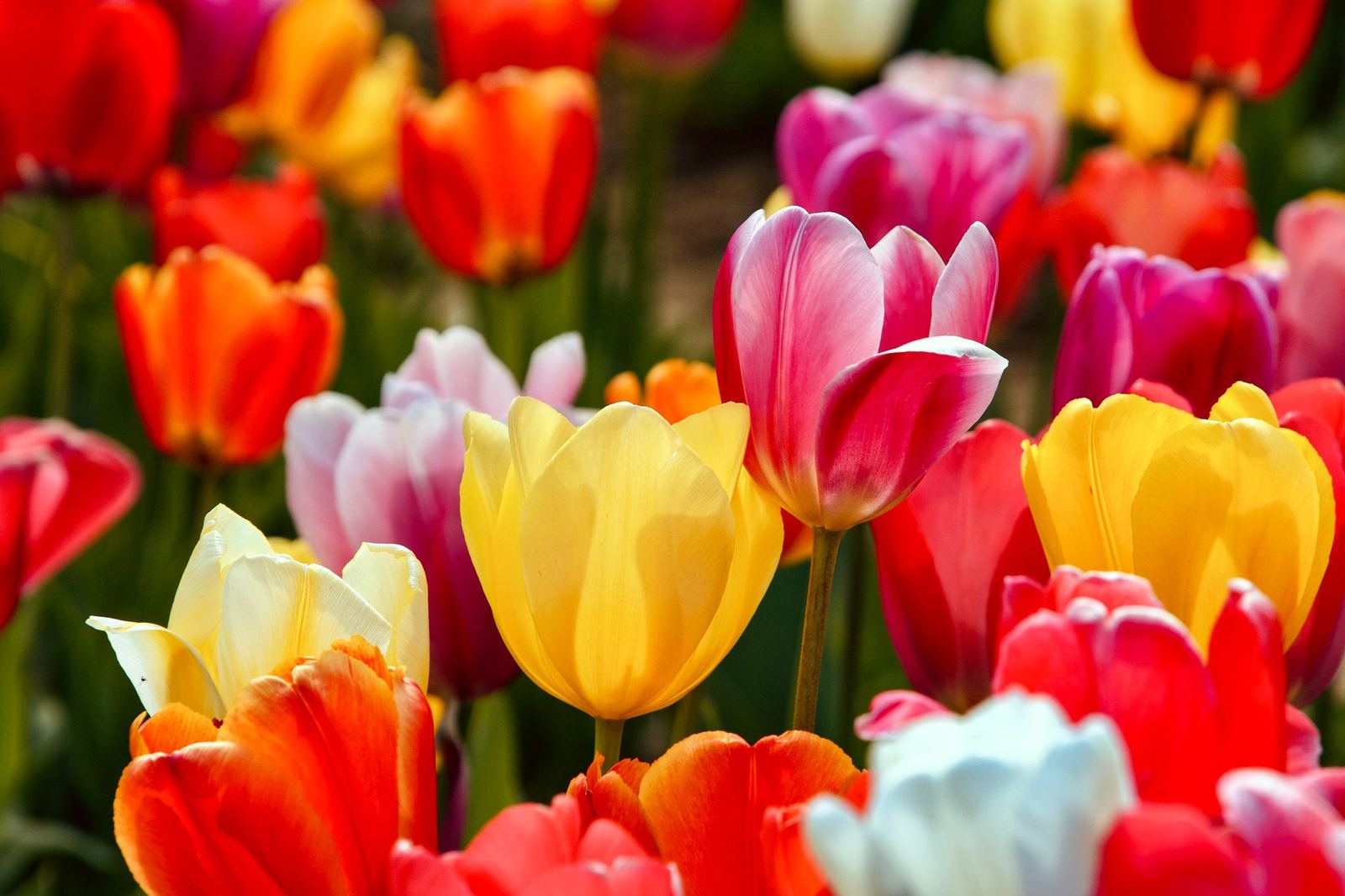
- Yellow: joy, lightheartedness, happiness and friendship.
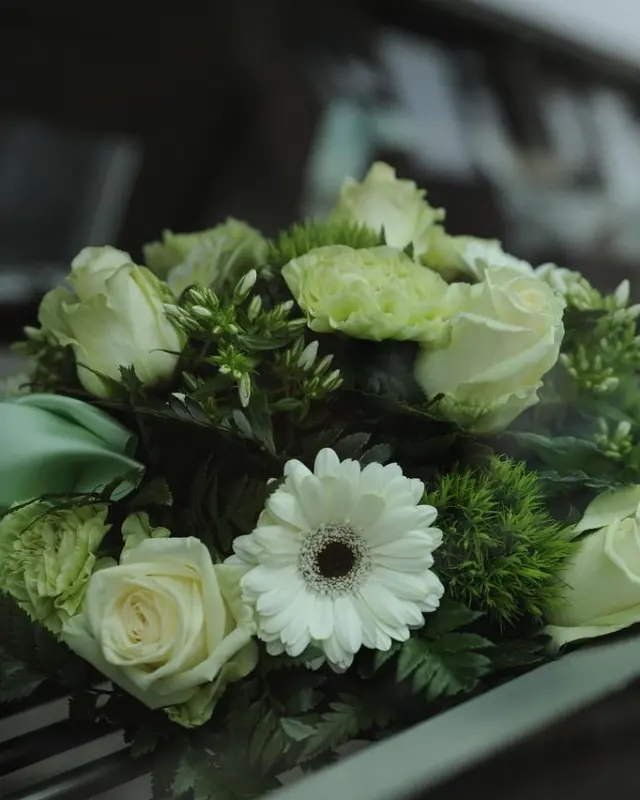
- White: purity, humility and innocence.
Nature Hills Nursery adds orange for warmth and enthusiasm and green for envy and avarice. It also lists yellow as light-heartedness or dislike, so a yellow bunch may not always read as cheerful to someone who knows the old code.
Why meanings change between cultures
The same flower can say very different things depending on where the reader grew up. MO BLUMEN points out that white flowers mean purity in Western cultures but mourning in many Asian cultures. Chrysanthemums symbolize joy and longevity in Japan, yet in many European countries they are funeral flowers.
Colour meanings shift as well. Bloom & Wild reports that pink flowers stand for trust in Thailand, good fortune in China and good health in Japan, and that white flowers can symbolise death and mourning in Asian countries.
If the person you are buying for has a different background from yours, ask or choose neutral stems rather than guessing.
Flowers with difficult messages
A few old meanings are blunt. They rarely matter now, but they explain why florists and gift-givers sometimes steer clear of certain stems:
- Yellow carnation: rejection, according to My Modern Met.
- Striped carnation: “I’m sorry, I can’t be with you”, per MO BLUMEN.
- Black rose: farewell, death and deep sorrow, from the same guide.
MO BLUMEN adds that in practice these negative meanings are usually forgotten, and no one sends yellow carnations as an insult today. Still, a personal note avoids any mix-up.
Using flower meanings when you give flowers
Meanings work best as a thoughtful extra, not a test. MO BLUMEN advises that what matters most today is choosing flowers the recipient will love, and that a personal note explaining your choice is more meaningful than any dictionary.
Nature Hills Nursery makes a similar point: any meaning we attach to a flower rests on individual connections, such as a grandparent’s favourite bloom. A flower that carries a memory for the recipient can outweigh any Victorian rule.
- Decide the message: thanks, love, friendship, sympathy or apology.
- Pick a flower or colour that matches, then check for cultural differences.
- Keep the mix simple so one meaning stands out.
- Add a short note that says why you chose them.
If you are arranging the flowers yourself, you can learn how to make a hand tied bouquet that keeps your chosen stems together neatly.
A wilted bouquet sent its own message to Victorians, so it pays to know how to condition cut flowers before you hand them over.
Frequently asked questions
Did the Victorians really communicate through flowers?
Show answer
Yes. MO BLUMEN describes floriography as a real social practice in Victorian England and Europe, supported by published flower dictionaries.
Do I need to memorise flower meanings?
Show answer
No. The advice from MO BLUMEN is not to worry about whether every Victorian meaning is correct, and to choose flowers the recipient will love.
Does a single flower mean something different from a bouquet?
Show answer
In Victorian practice, yes. Bloom & Wild says a single flower gave a direct, focused message, while a bouquet could combine several meanings.
Can white flowers be a bad choice?
Show answer
They can be, depending on culture. MO BLUMEN notes that white flowers mean purity in Western cultures but mourning in many Asian cultures, so check the recipient’s customs first.