
Buying Valentine’s Day flowers Canada-wide can feel like a gamble on price and timing. You’ll usually pay more for roses that week and face a late rush, so order early and ask for a mixed bouquet.
This piece sits within a wider look at the flower industry in canada, covering how imports and farms shape what ends up on the florist’s counter.
| Item | Value |
|---|---|
| Share of one Winnipeg florist’s orders placed on Feb. 13 and 14 (2019 report) | 80 per cent |
| Valentine’s dozen-rose price versus other times of year (Winnipeg florist, 2019) | three to four times |
| Roses imported into Canada (Statistics Canada, 2017) | 12.4 million dozen |
| Value of imported roses and rose buds (2017) | over $76 million |
| Cut-flower stems processed at Miami airport before Feb. 14 (2026 report) | about 990 million stems |
These figures come from Global News (February 13, 2019) and WLRN and the Associated Press (February 9, 2026). Prices, volumes and import rules change, so check the source before you rely on them.
Why the week before Feb. 14 is so intense for florists
Valentine’s Day demand is squeezed into a very short window. A Winnipeg florist told local radio, in a Global News report from February 13, 2019, that her shop gets 80 per cent of its orders on Feb. 13 and 14 because buyers leave purchases to the last minute.
CBC Toronto’s report of February 4, 2021 shows what that rush looks like at the counter. Sweetpea’s, a Toronto floral design studio, gave CBC three numbers that capture the squeeze:
- Normally 175 to 275 orders on Valentine’s Day itself, not counting the days leading up to it.
- Upwards of 400 orders expected for a single day in 2021, as pandemic-era demand grew.
- A self-imposed cap of 100 orders, chosen to protect the team’s wellbeing.
That was a pandemic year, so read it as an illustration of the pressure rather than a typical season. The practical lesson is that the longer you wait, the fewer designs and delivery slots a shop can offer.
Why do Valentine’s roses cost so much?
The same Winnipeg florist said a dozen roses on Valentine’s Day can end up three or four times what you would pay at any other time of the year, according to Global News in February 2019. She added that she had heard of florists charging $150 for a dozen roses when the cost was not even $30.
Her explanation was a chain of markups. Demand is so high, she said, that prices are typically marked up at every step between the farm and the counter, and farms harvest earlier, so quality is not as good (Global News, 2019). Her advice was not to avoid roses but to mix them into a bouquet instead of buying a dozen on their own.
Red is the colour driving much of the rush. An executive at a major Colombian cargo airline told the Associated Press that more than 50-60% of the flowers it carried at that time were red roses, in a report published February 9, 2026.
That same report, as of its February 9, 2026 date, said buyers would likely see higher prices, blaming tariffs on imports from Colombia and Ecuador placed the previous year and a new minimum wage in Colombia. It was written about the U.S. market, but the same Miami route also supplies florists and supermarkets in Canada.
Where Valentine’s roses in Canada come from
Canada leans heavily on imports. Citing Statistics Canada, Global News in 2019 reported that 4.4 million rose stems were produced in Canada in 2017, but considerably more, 12.4 million dozen, were imported from countries like Colombia and Ecuador. That was over $76 million in imported roses and rose buds.
Many of those flowers travel through Florida. According to the WLRN and Associated Press report of February 9, 2026, agricultural specialists at Miami International Airport were set to process about 990 million stems of cut flowers in the weeks before Feb. 14. Around 90% of the fresh cut flowers sold for Valentine’s Day in the U.S. come through Miami, and the rest through Los Angeles.
The largest importer there, Avianca Cargo, was moving about 19,000 tons of flowers on 320 full cargo flights, the same report said. Those flowers arrive mostly from Colombia and Ecuador before heading on to florists in the U.S. and Canada.
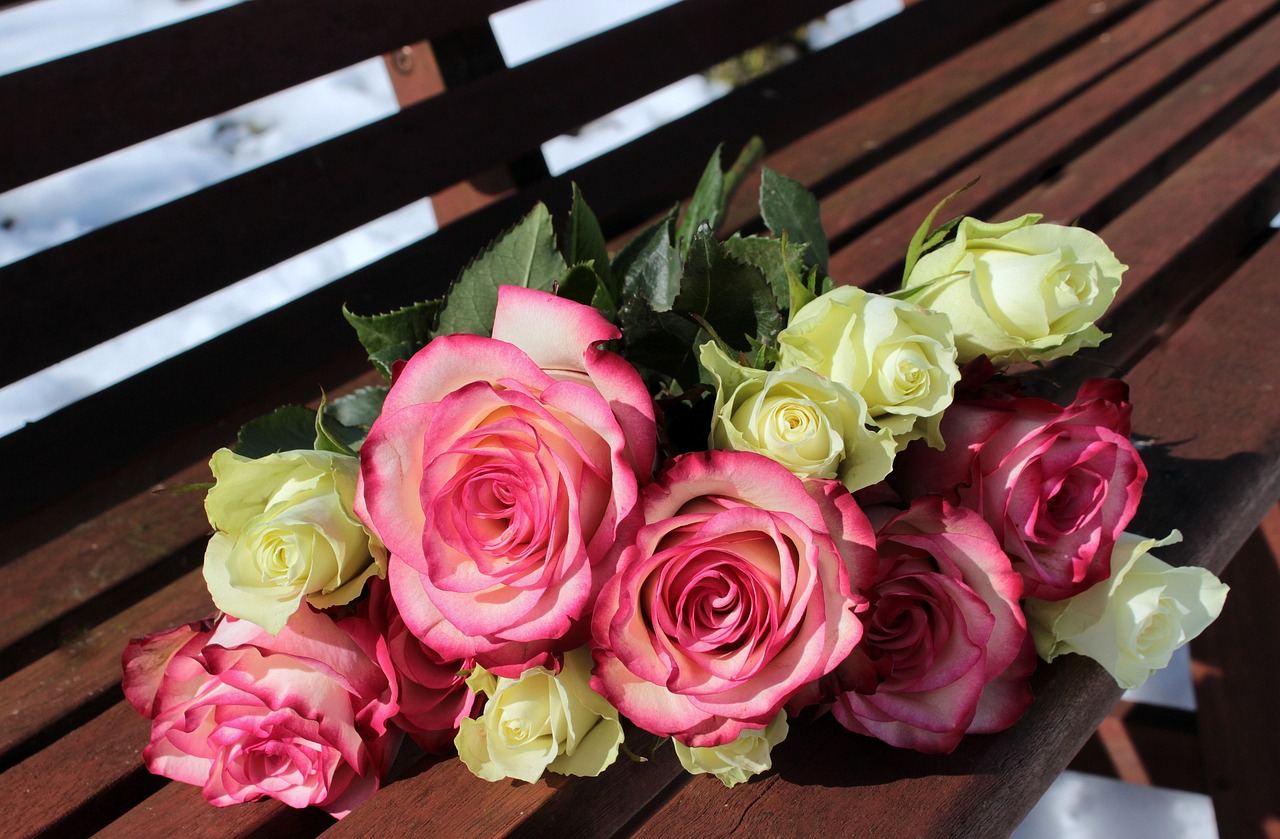
An older Global News report from February 13, 2014 explains the timing behind that supply. It said Ecuador, the leading supplier of roses bound for Canada, lies about 5,100 kilometres south, and that growers begin cutting their first Valentine’s crops on Boxing Day. A Vancouver wholesaler said the roses reaching shops are two, maybe three weeks old by then.
What Canadian rose growers add
Local roses are a small part of the supply, but they exist. Ryan Worsfold of Eurosa Farms on Vancouver Island told CBC that his farm produces around 70,000 stems for the week of Valentine’s Day, and the farm is one of only a handful of commercial rose farms in the country, according to Flowers Canada Growers’ Cary Gates, in a CBC report from February 14, 2022.
The decline of domestic rose growing was already well documented. A British Columbia grower co-op representative estimated in February 2014 that B.C. rose output had fallen by 60 per cent over roughly a decade, with heating and labour costs too high to compete with Ecuador.
The pandemic nudged things the other way for a while. One B.C. wholesaler told CBC in February 2022 that imported roses had risen about 25 per cent per stem over two years, and that flying flowers out of Ecuador had climbed to about $5 a kilo from the usual $2. Scott Lindeboom of Lindy’s Flowers in Ontario reported a 20 per cent rise in demand at his farm, though he noted that foreign production was gradually increasing again.
For a closer look at growers in that province, see this guide to flower farms in ontario.
Freshness is the other selling point. Worsfold said in the same 2022 report that his roses typically spend two days in a box, while imported roses typically stay refrigerated in a box for a week.
How to order Valentine’s flowers without overpaying
The sources point to a few sensible habits for anyone buying flowers in Canada for Valentine’s Day:
- Order early. Florists quoted by CBC in 2021 urged customers to book arrangements ahead because supply was unpredictable and some shops capped orders.
- Ask for a custom design. One Ajax, Ont., florist told CBC that encouraging custom designs let her shop use more local flowers, and that people were very happy with the result.
- Mix the roses. A bouquet that blends roses with other stems avoids paying peak prices for a dozen alone.
- Ask what is in the price. When a dozen roses costs several times the usual rate, find out what the stems, design and delivery include.
- Consider another day. Roses cost far less outside the Valentine’s rush, so a gift on a nearby day can stretch your budget.
Another busy date on the floral calendar is covered in the guide to mother’s day flowers canada, which is worth reading if you plan gifts across the year.
Frequently asked questions
Why are roses so expensive on Valentine’s Day in Canada?
Show answer
Demand peaks sharply, and a Winnipeg florist said prices are marked up at every step from farm to counter. She put a Valentine’s dozen at three or four times the usual price in Global News in February 2019.
Are most Valentine’s roses in Canada imported?
Show answer
Yes. Statistics Canada figures cited by Global News in 2019 showed 4.4 million stems produced in Canada in 2017 against 12.4 million dozen imported. CBC said in February 2022 that Canada still largely relied on imported roses.
When should I order Valentine’s flowers?
Show answer
Before the last-minute rush. One Winnipeg shop reported 80 per cent of its orders arriving on Feb. 13 and 14 in Global News in 2019, and Toronto florists urged early orders in CBC’s February 2021 report.
Can I buy Canadian-grown roses for Valentine’s Day?
Show answer
Sometimes. As of CBC’s February 2022 report, commercial rose farms were only a handful nationwide, though one Vancouver Island farm produced around 70,000 stems for Valentine’s week. Ask your florist whether local stems are available.